Thursday 17 May

Nobody makes horror films like the Canadian taxpayer

By Kier-la Janisse 3:02 PM

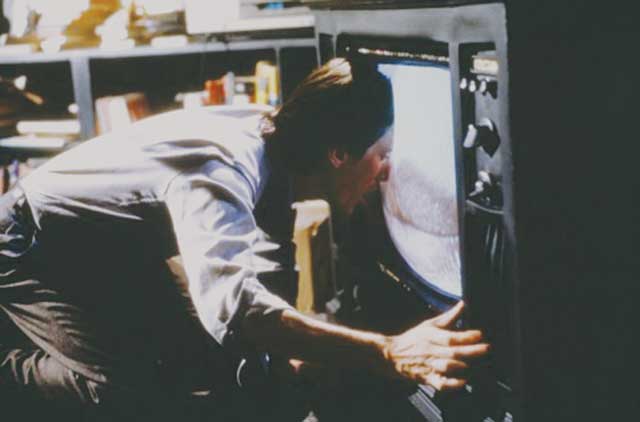
Canuxploitation fans rejoice! On Sunday, 20 May at the Roxy Bar and Screen, the newly-inaugurated Shivers Film Society launches its first in a screening series devoted to Canadian genre cinema, with an all-day marathon of indie films from the last decade and capped off with a screening of David Cronenberg’s seminal Videodrome (1983). Don’t consider yourself a Canadian B-film aficionado? You probably are more than you know.

“The mandate [of the organization] is to illicit an appreciation of Canadian films by audiences and a sense of national pride from contemporary indie Canadian filmmakers by revealing the strong influence, cultural relevance, and cinematic history in the story of Canadian cinema, and cinema production,” says Vince D’Amato of Vancouver’s Creepy Six Films, who first hatched the idea for Shivers when he was living in London last year. “London is a city rife with film societies and has a phenomenal cinema culture unlike anything I’ve experienced,” he continues, “and I was inspired to begin screening films from our own production catalogue there in the city.” Although he’s now back in Vancouver, his partners Justin Harries from Filmbar ’70 and Scala Forever, and Nadeem Ali from Videotape Swapshop will be running the London-based events, while D’Amato focuses on setting up similar screenings on Canadian soil.

With the event bearing the tagline ‘The Influence of the Canadian Tax Shelter Films’, it’s probably important to know what tax shelter films are. While the term has gained some cachet in recent years, many people are still foggy on the details, so simply put, the Tax Shelter Era refers to the period between 1974-1982 when the Canadian Film Development Corporation gave investors in Canadian filmmaking a 100% capital cost allowance, as a means of encouraging national production. The term sometimes extends to films made through the late 1980s, as there was still a 50% tax break, but by 1990 it had dropped back to roughly 30% and the tax shelter era was officially over.

But this period was about more than economics – many people think of the tax shelter as an ethos, a ‘golden era’ of unprecedented freedom from stifling nationalist mandates. It was, for better or for worse, a cinematic free-for-all. The founding of the Canadian Film Development Corporation (or CFDC) in 1967, a federal initiative to create a self-sufficient film industry outside of documentary and experimental animation (what Canada was primarily known for, via the NFB) was especially seized upon in Quiet Revolution-era Quebec, which was enjoying an exciting cultural and political overhaul. It was in this context that Canuxploitation pioneers Andre Link and (the late) John Dunning were able to turn their distribution company Cinepix into a production house, which ushered in Quebec’s wave of ‘maple syrup porn’ (a term coined by Variety but adopted into the Canadian vernacular) with Denis Héroux’ Valérie (1969) and L’Initiation (1970). Countercultural softcore films and sexy satires proliferated in their wake, from lowball sex comedies like Après Ski (1971) to campy spy capers like 1972’s IXE-13 (‘The French Canadian Dream!’). By the early 70s, Cinepix – like their counterparts Quadrant, Astral Bellevue Pathé and Cineplex – turned to horror as the next wave, which gave a start to directors like George Mihalka (My Bloody Valentine), William Fruet (Death Weekend), Bob Clark (Black Christmas) and David Cronenberg (Shivers), who all benefited from the tax breaks that were by then in place. While many of these directors didn’t necessarily see themselves as aligned with the genre per se (Fruet for example was best known for penning Don Shebib’s 1970 CanCon classic Goin’ Down the Road), the tax shelter program allowed them find a way to marry their more heady aspirations to the exploitation ethos.

During the tax shelter era, Canada was actually out-producing Hollywood, but that doesn’t mean the films were lapping up awards. The tendency of the tax shelter pictures toward exploitation fare elicited the ire of Robert Fulford of Canada’s Saturday Night magazine when he discovered that Canadian tax money went in to the creation of Cronenberg’s transgressive parasitic orgy, Shivers (1970). “You Should Know How Bad This Movie Is, You Paid For It,” admonished the headline of his review. Of course the fallout from this notorious editorial only stoked Cronenberg’s then-budding career.

Nearly 350 movies were made before the 100% capital cost allowance was abolished as a national embarrassment – an indignance helped along by the fact that the funders found out that many companies weren’t even bothering to release the films they made. But the influence of Canada’s notorious tax shelter era – from both the resourceful financial structuring of the productions to the anti-capitalist themes of the films themselves – is rife in the Canadian genre films that followed, which the Shivers Film Society hopes to illustrate through their series by pairing original tax shelter films with contemporary counterparts. “The addition of Videodrome to the program was to connect these films with one that was actually from the Tax Shelter era in Canadian history,” says D’Amato, who also says that their namesake film may be in the cards for a future screening. But he wanted to kick things off with Videodrome, which he cites as “one of my favourite films of all time”, along with The Brood (1979), Cannibal Girls (1973), Black Christmas (1974), Rituals (1977), and his “guilty pleasure”, Hello Mary Lou: Prom Night 2 (1987).

Cronenberg’s final tax shelter film comes in at the end of a colorful lineup that includes John Fallon’s bloody relationship-showdown short The Red Hours (2008), Christian Viel’s action-revenge picture Deaden (2006), Maurice Deveraux’ $lasher$ (2001), a gory real-time sendup of the Japanese game show phenom (prefiguring what would soon after become the North American obsession with reality TV), and Vince D’Amato’s own The Hard Cut Double/Feature (2011), a sort of film noir Rashomon full of gangsters and immortal femme fatales and where the focus of alternative recollection is a missing film print.

“The mandate is not meant to focus on the Tax Shelter era specifically in the long run,” D’Amato concedes. “We’re trying to build a palpable cinematic history of Canadian film. We’ll be showing more films directly from the Tax Shelter era in future screenings, too. Shivers won’t be a one-time event, we’ve got two more planned in London that will flesh out the cinematic structure of the Tax Shelter films and a monthly double-feature event in the works for Vancouver, which I hope will launch pretty quickly.”

The series is rather timely too – Jason Eisener’s Hobo With a Shotgun and Astron-6’s Father’s Day have gotten oodles of international press over the last year, all of which directly references the Canadian tax shelter era. Fangoria Magazine devoted a special issue to Maple Leaf Horror back in January, the Toronto Film Critics Association awarded Cinepix with the illustrious Clyde Gilmour Award (a bit of revenge considering Gilmour was among Cinepix’ loudest detractors in the 70s, when he was a critic for the Toronto Star) and American theatres from Austin to L.A. have hosted screening retrospectives, all aided in no small part by the wealth of information coming from Paul Corupe’s encyclopaedic Canuxploitation.com website and Caelum Vatnsdal’s pioneering tome They Came From Within: A History of Canadian Horror Cinema), the latter of which spearheaded probably the first serious retrospective of tax shelter films to tour across Canada. Canada’s capacity for exploitation gold is really being mined and reappraised of late, and Shivers promises to help that appreciation along in a major way.

Sunday 20 May

The Roxy Bar & Screen
128-132 Borough High Street, London SE1 1LB</i?

3:00 pm: The Red Hours / Deaden: £3 (both films)
5:00 pm: $lasher$: £3
7:00 pm: The Hard Cut Double/Feature: £3
9:30 pm: Videodrome: £3

ALL DAY PRICE: £8.00 – Tickets will also be available at the door or online at TheyCameFromWithin.com

Wednesday 25 April

What to see (and what to avoid) at the first Sundance London Film Festival

By Declan Tan 1:07 PM

The first ever Sundance London Film and Music Festival kicks off later this week, from 26-29th April, with indie-Jesus Robert Redford sticking his boots into everyone’s favourite little indoor town (the O2 Arena in Greenwich, if it wasn’t already your favourite little indoor town).

A mixed bag of new films – mostly award winners from the American Sundance – will be making their UK premieres before theatrical release, 14 to be precise.

There will be good. There will be bad. There will be painful. Here’s our list of what to see, and what not to see, with full reviews to follow.

YES
Liberal Arts
Woody Allen-lite to start with, before going on to actually say something

Safety Not Guaranteed
Parks and Recreation combines with The League for some comedy shenanigans

The Queen of Versailles

The House I Live In
War on Drugs Sundance Jury Prize winning documentary from Eugene Jarecki

Chasing Ice
Climate change documentary about National Geographic photojournalist James Balog as he trains revolutionary time lapse cameras on melting glaciers

NO
An Oversimplification of Her Beauty
A short film stretched to excruciating lengths. Better to just sleep
Filly Brown
‘8 Mile’ meets Immortal Technique and has a crap film baby
2 Days in New York
Unless you liked the irritant-as-film ’2 Days in Paris’ then you might be prepared for ‘Julie Delpy Guesses Who’s Coming for Dinner’
Nobody Walks
Beyond navel-gazing film about the self-pitying Hollywood bourgeoisie

MAYBE
Finding North
Facile and condescending documentary about food insecurity and poverty in the USA, yet certainly a worthy subject
For Ellen
Wannabe rockstar Paul Dano wants to meet his daughter. Takes ages.
SHUT UP AND PLAY THE HITS
LCD Soundsystem’s last gig, filmed in Madison Square Garden. If you like them then you will like this, probably.
LUV
Baltimore-set reunion for a good few members of ‘The Wire’, a good first half an hour, then becomes every cliché in the ‘umma-gainsta’ movie handbook
River’s Edge
Chance to see Keanu Reeves and Crispin Glover in the 1986 crime drama on the big screen. Can watch it at home though can’t you?

Seriously, No:
An Oversimplification of Her Beauty
Nobody Walks

Saturday 24 March

London in the year 2000 as seen by the 1960 film, Beat Girl

By Darren Atwater 12:47 PM

Islingtongue has found this vid of the 1960 film, Beat Girl. Press play to see an architect tell his wife about the fantastic world of tomorrow, a London, where “Grime, filth, poverty, noise, hustle and bustle, these things will be unknown.”

The whole film is there – it’s actually a cracking good exploitation flick.

From YouTube

Paul, a divorced architect, marries Nichole, a woman from Paris. His teen daughter Jenny has fallen in with the English beatnik scene and likes to hang out in cave-like clubs to listen to jazz and rudimentary rock’n‘roll. Jenny takes an immediate dislike to her mother-in-law, who is not that much older than she, and goes out of her way to make life miserable for Nichole. When Jenny discovers that Nichole is a friend of one of the strippers from the dance hall across the street, she investigates and uses Nichole’s sordid past to embarrass her father. Meanwhile Jenny attracts the lecherous eye of Kenny, the owner of the dance hall.

Hat tip to The Great Wen


Video LDN is the daily video of London. Please give us your suggestions here.

Thursday 22 March

A few happy words with artist Stefan Sagmeister

By Ray Jackson 2:59 PM

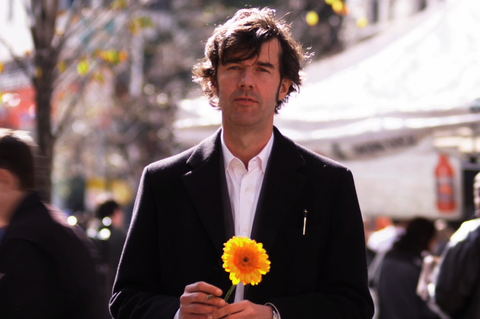
Stefan Sagmeister is best known in the art world (and real world) for his explorative graphic design work. He’s has worked on projects ranging from the commercial, the cultural, and some which have allowed him to cross over into other industries, perhaps most notably, with his album cover designs for Lou Reed and the Rolling Stones.
 The New York based Austrian recently embarked upon arguably one of his most interesting projects yet, one which would ask serious questions about the human condition and methods in which we all partake to achieve happiness.
The Happy Film is the designer’s first expedition into the realm of documentary film making, and as he puts it, one which seeks to explore, in a sense, how to ‘improve one’s surroundings and well-being’.

“Why be interested in anything else?” he asks.
 
Already established in his chosen field of graphic design, I query the reasons for tackling the subject of happiness in, what is for Sagmeister, a new and untested format.

“It seemed more challenging to do this in film rather than print. Trying out a new medium prevents me from becoming too complacent,” he explains.

“It might fail miserably, but if I’ve gotten a hair happier in the process, it might have been worth my while. I’d love to find an answer to the question—is it possible to train my own mind in the same way it is possible to train my body. Can I—through various techniques that will include acts of meditation, cognitive therapy and drugs—increase my overall level of happiness? While a number of serious psychologists are convinced that this is the case, I’d love to find proof for myself and the viewers. Most things I do every day are somehow geared towards this goal anyway, often just not in a very direct way.”

Currently ‘under construction’, The Happy Film sees Sagmeister teaming up as ‘co-director’ with filmmaker Hillman Curtis, and will have him acting as ‘guinea pig’ as he undertakes treatment traditionally used to combat depression and improve one’s state of mind; these include meditation, cognitive therapy and taking pharmaceuticals such as Prozac. With this in mind, I wonder has the designer ever suffered from depression in the past?

“No… not in any serious way. I was rather down and a lethargic in the year after my Mum died, but have since recovered fine,” he asserts.

The subject of happiness is a matter so multi–layered that there could be danger of a filmmaker getting lost in his own subject. In order to add structure to the process Sagmeister and his small team organized the storyboard around 3 prolonged self-experiments, and as Stefan explains, some have seemed to work better than others.
“There were times during meditation when I felt it really working and thinking: ‘Why is not everybody doing this all the time?’” he says. “And then there were times when I felt it difficult and boring. There were times during cognitive therapy when I felt exhilarated after a session… or, actually, when putting the things discussed during a session into actual use in my life.”

Not to get too serious but keeping in line with my nature, I bring up the subject of God and religion, mentioning how Sigmund Freud believed human beings would never put down superstition until they get over their innate fear of death. Surely this could have a lot to with one’s own state of mind?

“Well the idea of God giving comfort might be the reason why religious people come out happier than atheists in surveys. Other people think the community involvement that most religions provide affords this extra bump in well being,” he says.

“I do think it is impossible to reach permanent happiness. Daniel Nettle thinks of happiness as a carrot on a stick, designed by evolution to show the right way, and also designed so that we never permanently find it. We likely would just sit around and eat sweet and fatty foods all day and that’s not in the interest of evolution. I do think it is helpful to distinguish three different levels of happiness according to time: There is short time happiness like bliss, joy and ecstasy, mid-term happiness like satisfaction and well-being and long term happiness like “finding what you are put on this earth for”.

Getting back to what Stefan Sagmeister ‘was put on this earth for’, and with the fact that filming does seem to be going well, does he have any more film-based projects on the cards?

“Oh no, the one is all we can possible handle in right now. Here and there we do a commercial, also in order to learn more about the medium,” he says.

“I think the film will be done by fall 2013, and we’ll go through the regular festivals to look for distribution. Ideally, this would be a cinematic release, but I am aware how few documentaries do wind up in the cinema. But I still feel very much like a designer.

Sometimes I now just leave the ‘graphic’ off, as we did complete projects like installations in the past. But I am not an artist.”

Friday 2 December

See this tonight: The London Underground Film Festival

By PSA 4:22 PM

The London Underground Film Festival celebrates opening night with some of the best underground film, music, and performance art Europe has to offer, compered by Princess Julia.

GERTRUD STEIN
Synthpop chanteuse Gertrud Stein will be gracing our stage, accompanied by her virtual backing dancers.

SOFT RIOT
Soft Riot is JJD of Savage Furs: one person with a lot of antiquated equipment and lighting performing sinister, minimalist electronic “pop” songs equally influenced from dystopian film, soundtracks and various types of “wave” music. A forthcoming EP, “Another Drone In Your Head”, will be released on the US label Tundra Dubs in early 2012.

PARDON MY EARLY EXIT; HOPE YOU SURVIVE!
A rare performance by the gender bender-sound-art-project – pardon my early exit; hope you survive! , an open multimedia platform to experiment with sound, vision, touch, smell, taste, and the six and SevEn senses, an obsessive/compulsive collector interested in what others reject or can’t find use for, to give it a new life, a new name and a different meaning. Loud or quiet, clean or distorted, no preconceptions, restraint is a tool to reach further, sink deeper, spread out wider and shrink. For this special occasion expect or unexpect deep sea creatures and aliens … as above, so below!

EMERGENT BEHAVIOUR
Performance art duo Emergent Behaviour will be presenting a new piece devised especially for the London Underground Film Festival.

MILKandLEAD
Theatre and body art performer MILKandLEAD will be performing “The Red Virgin Mary”, exploring the sacred and profane in a re-reading of the traditional self-immolation rituals performed by sacristans in some southern Italian villages.

Plus DJs:

HEIDI HEELZ
Creator of Dice Club and erstwhile bass player in The Guillotines, Heidi is now on a mission to instigate a glam rock resurgence. It is going quite well. Catch her at GlamRacket every first Saturday of the month at The Buffalo Bar or at her residencies at Aces & Eights, The Lexington and The Retro Bar. And while you’re at it check out her Roxy and Eno tribute band “Proxy Music” (next gigs: Dec 20th at The Buffalo Bar and Dec 31st at The 100 Club).

BRAVE EXHIBITIONS
Brave Exhibitions is cold/minimal/no(w)-wave muzak club renowned for the avante-garde and the “unexpected”. Established in the notorious darker corners of Shoreditch, London, and now expanded to Berlin – Brave is a rookery for precocious bands, performance artists, and DJ’s that will compel and disturb you.

NEVER COME BACK
Founded by Emily Rose England and Alison Lewis, Never Come Back is London’s newest experimental dance party. The club featuring some of the most exciting performers to grace the scene and spinning classic and new minimal wave, NDW, coldwave, queerwave, post-punk, synth pop, new beat and old EBM.

PROJECTIONS:
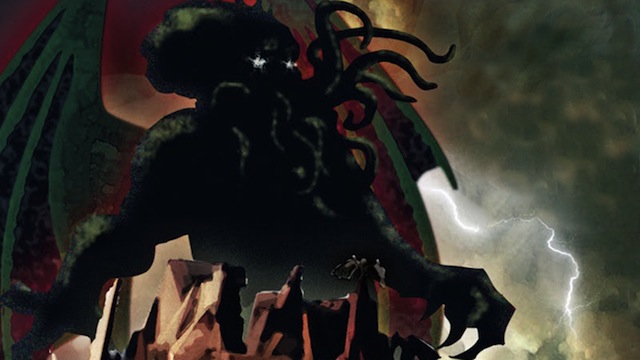
Carmen Burguess is an Argentinian artist who works with several techniques, including collage, video, installation, drawing, and fotonovel. Her graphic work has been published around the world and used for novels and magazine covers. She illustrated writers such as H.P Lovecraft. Based in Berlin since 2008, Carmen is half of the band Mueran Humanos.

MOMENTO MORI
The Opening Night Party will also be the launch of an exhibition of new works by Emily Rose England, called “Momento Mori”.

Advanced tickets are available at: We Got Tickets

Tuesday 15 November

First trailer for the Iron Lady

By Darren Atwater 11:09 AM

WIth the guns and the explosions, this looks like the rom-com action hit for 2012.

Friday 28 October

12:17 PM

Welcome to the new Hackney Picturehouse on Mare Street, opening today. Bonus: they serve London Fields beer.

Tuesday 12 July

Harry Potter and the Deathly Hallows Part 2

By Alan Hindle 5:56 PM

(Image above shows the critics gathering for preview screening of HP7Pt2)

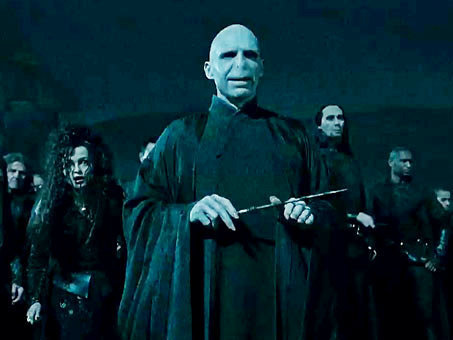
Harry Potter and the Deathly Hallows Part 2 (HP7Pt2) picks up, obviously, where the the last film left off, with Harry, Hermione and Ron chasing after and destroying horcruxes into which He Who Must Not Be Named has invested chunks of his soul. Whereas the first Deathly Hallows seemed a sort of satire on camping holidays in the UK, the second is a relentless battle against the forces of good and evil, wherein characters loved and hated are dealt their final fates.

Harry Potter, the biggest franchise in book and film history, is finally done and fairy dusted. Millions more pounds, perhaps billions, are still to be made in book sales, boxed DVD sets, amusement park tickets and assorted accessories such as video games, commentaries and spin-offs. Yet the bulk of the financial adventure is over. HP7Pt2, incidentally, is also the chemical formula for heffalump tears, a crucial ingredient in a Potion of Sentimental Commercialism.

Contrary to what many pundits seem to think, however, the cultural significance of Harry Potter is only just beginning. Critics may sniff at JK Rowling’s creation, but the kids who love it are going to be reading the books to their kids long after the professional naysayers are dead and patrolling Azkaban. Playground word-of-mouth, not media coverage, propelled early sales of Harry Potter into the stratosphere. Children don’t tend to pay much attention to literary reviews, and anybody who knows anything about the reading habits of kids knows that it wasn’t parents foisting “must reads” on their little darlings that made Rowling’s boy wizard such a publishing phenomenon.

Painted in a palette ranging from iron to lead, without a single scrap of Weasley knitwear to jumper-start the colour scheme, and lit only by gloomy skies and bursts from deadly wands, Hallows actually contain more humour than any of the films since Chamber of Secrets. Apparently the film makers finally realised the morbid themes of death and regret might be better offset by playing up the story’s more lighthearted, entertaining aspects. If all the films had been as enjoyable and thrilling as this one they might have made twice as much money and half as many grumpy enemies in the press.

In the octology’s conclusion Harry finally stops whining and takes destiny on the jutting chin of his square head. Neville finds a spine, Hermione and Ron get to make out, the late Dumbledore is revealed as being, above all, a ruthless tactician, and Snape is, well, the coolest Emo wizard ever. (I’ve long had a theory that Harry is actually the product of a one-night adulterous fling between the surly Potions professor and lily-white Lily Potter in the basement of the Leaky Cauldron Pub. I don’t care how low the alcohol content is, you serve enough butter beer and there’s going to be unicorn action going on downstairs.) Voldemort, however, is somewhat diminished as a bogeyman by having almost as much screen time as Harry. And frankly, Potter is beginning to become the scarier-looking of the two.

While the focus is obviously placed on our three main heroes, Deathly Hallows Part 2 at last sees minor characters, played by fantastic actors, flexing their magical muscles. While short, these scenes are often the punchiest, most energised moments in the film. Matthew Lewis as the other prophesied boy wizard, Neville Longbottom, carries several key moments on his shrugging shoulders. Maggie Smith is given a chance at last to have some real fun while Julia Walters kicks Slytherin ass and unleashes the nearest thing to a wobble in the franchise’s 12 certificate. (As yet another aside I think the film is unfair to Slytherin, the dorm of the school dedicated to, yes, future City Bankers, but also to the weird, broken Goth kids who don’t even fit into the wizarding world. For centuries they’ve been good enough for their parents to pay the school’s fees, but at the first sign of trouble- one girl says they should turn Harry over to the Deatheaters to spare everybody else. Fairly practical thinking, it seems to me- and they are evicted by McGonagall! Shameful. Send owls to your local MP. )

Most of the actors are, as usual for Harry Potter films, utterly wasted. Sure, Robbie Coltrane filled the screen through much of the first two films, and Helena Bonham Carter’s Bellatrix LeStrange was elevated in Half Blood Prince and HP7Pt2 to become one of the all time great screen villains. But to be all but ignored for the grand finale seems cruel. Here LeStrange serves mostly to reveal how cool Mrs. Weasley can be when you let her out of the kitchen. Most of the film is a connect the plot points exercise for fans of the books. Having said that, and keeping in mind I am actually a big fan of both the books and movies (How dare he call himself a film critic! For a start he calls them ‘movies’!) I feel I can say this is easily the best of the series, even above Prisoner of Azkaban, and a fitting conclusion to a British mythology equal in eventual cultural impact to (wait for it) Lord of the Rings. There. I said it. Go writhe in your cringing place if you disagree. Meanwhile, I’ll be in that back room of the Leaky Cauldron with a barrel of butterbeer, a stack of slash zines and hopes the Grey Lady of Hogwarts will one day comes to her senses.

Harry Potter and the Deathly Hallows opens pretty much everywhere 15 July. 12A certificate.

Thursday 23 June

An alternative cinema experience in Hackney Wick courtesy of Folly For A Flyover

By Lauren Down 10:23 AM


Photograph by Sonny Malhotra

Hand-built in Hackney Wick, with local reclaimed materials, ‘Folly for a Flyover’ has transformed the derelict underside of the A12 Flyover into a performance space for all manner of events. From 24 June until 31 July they’re holding workshops by day and screenings, live scores, light shows and performances by night.

Evenings are arranged around weekly themes from ‘Fables’ and ‘Characters/Superheroes’ to the Hackney Wicked Festival. Films will range from animated classics to early and experimental cinema, including Flash Gordon, 2001: A Space Odyssey, Toy Story and Tron (with a live score performance) whilst performances are confirmed from the likes of Peggy Sue.

You can check out the full schedule below.

June
24 – Once Upon A Time In A Folly Far Far Away feat. Snow White And The Seven Dwarfs
25 – The Adventures of Prince Achmed w/Live Soundtrack by Sawchestra
26 – The Adventures of Baron Munchausen

July
1 – Middle of The Road w/ Peggy Sue
2 – The Beast From 20,000 Fathoms
3 – Requiem For Detroit
8 – Tron w/Live Score
9 – Trip To The Moon and Other Shorts w/Live Score
10 – Secret Screening
15 – Flash Gordon
16 – Minnie The Moocher and Gertie and Her Gaeity
17 – Toy Story and Bicycle Thieves
22 – Akira
23 – 2001: A Space Odyssey
24 – Wizard Of Oz
29 – Hackney Wicked Presents Video and Short Films
30 – The Wild One
31 – A Few More Dollars

Details on how and when to purchase your £4 movie tickets can be found over on Folly For a Flyover’s website.

Tuesday 31 May

The Hangover Part II

By Rebecca Sear 2:52 PM

Dir: Todd Phillips
Starring: Bradley Cooper, Ed Helms, Zach Galifianakis, Justin Bartha

Those clever, clever folks at Warner Bros. have gone and done it again: taken a hugely successful film like The Hangover (highest grossing R-rated comedy film of all time, dontcha know?) and strung it out into an unnecessary sequel. Less hangover, more paralytic three-day blackout – the kind which really starts to drag after a while. In the second instalment of Todd Phillips’ über-successful buddy comedy concept the ‘Wolfpack’ are back, and you can bet your bottom baht* that it’s going to be messier, crazier and yet somehow exactly the same as Las Vegas. Except with more Thai ladyboys.

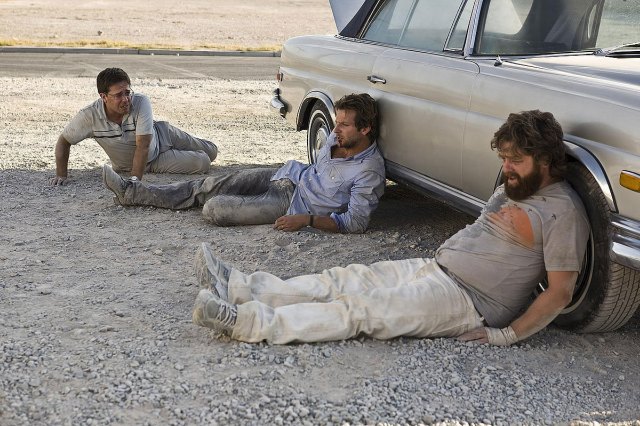
Phil (Bradley Cooper), Alan (Zach Galifianakis) and Doug (Justin Bartha) join Stu (Ed Helms) in a serene Thai resort for his wedding to his implausibly hot fiancée. Still scarred from Doug’s pre-wedding Las Vegas-based shenanigans, Stu takes the safe option of IHOP for his bachelor send off. However, blueberry pancakes weren’t quite what the rest of the gang had in mind, as they persuade him to lighten up and join them for a quiet beer on the beach once they reach Thailand. Cut to a grimy Bangkok backstreet, and the Wolfpack are left to piece together the events of the previous night, and to locate Stu’s misplaced 16 year-old brother-in-law after a grisly clue is discovered. With no leads as to the night’s occurrences apart from a monkey and an unfortunately placed tribal tattoo (the unfortunate place being Stu’s temple), it seems like the wedding will be off. Of course it won’t really be though, because that would be an appalling ending, but the suspense won’t build itself!

Why Bangkok? Well firstly, the tagline ‘Krakow has them now’ isn’t quite so intriguing, and furthermore, Bangkok apparently seems to present far more opportunities to be just a little bit racist. To illustrate: there’s the fact that everyone in Bangkok is portrayed to be hostile, dirt poor and/or a criminal, the insinuation that Thai strippers would of course all have concealed penises about their person, and even the way the three leads seem to interact with the Bangkokians smacks of ignorance and makes me feel slightly embarrassed to be a Westerner.

Performances from lead characters are consistently okay; man of the moment Zach Galifianakis is the strongest comedy actor in the cast, yet one feels that he’s reaching the point of Jack Black style over-exposure. Bradley Cooper’s character provides a strong contrast to the sometimes bland simpering of Ed Helms, but his explosive temperament significantly reduces his likeability. The Hangover: Part II sees the return of Mr Chow from the first instalment. After approximately two minutes on screen you’ll wish he hadn’t returned. Watch out for a brief but well-played part from Paul Giamatti, also.

The Hangover: Part II will be revelled in by those who know and love the characters already. The story is predictable, but the scriptwriters couldn’t really do much more with the concept of a three day binge apart from transpose it to a different setting. It will certainly do well at the box office, but one hopes that it’s left there and not stretched into a third repeat of events. Although, maybe The Hangover Part 3: Blackpool Nights would have a certain je ne sais quoi?

*that’s Thai currency. Obviously


join our mailing list
Sign up to Unreal City. Every week, a choice list of alternative London

The Scoop

News & Views from City Hall to your Town Hall

London has chosen its mayor, but why can’t it choose its own media?

We don't have Brian Coleman to kick around any longer. And that's okay.
Boris Johnson's fire chief spends £1000 on lunch for Tory chums

MP Free

A brand-new song-of-the-day, every weekday

Brainlove Festival: Tall Stories

Väljasõit Rohelisse - Teine Vals
Brainlove Festival: Bleeding Heart Narrative

Video LDN

A London video every week day.

Interested in watching a video of a brain dissection? It's HD!

Jason Hawkes' aerial film of London at night makes the city look like Bladerunner
Watch a timelapse video of the ArcelorMittal Orbit being built.

Video LDN is the daily video of London. Please give us your suggestions here.

Tube Updates

Related Posts Plugin for WordPress, Blogger...