
Slushy Guts
Slushy Guts is the musical alter ego of one Stephen Keane, who also operates as a well-known artist & illustrator under his Chaos Vs Cosmos moniker. Armed with a only guitar, a dinky keyboard and a furrowed brow, his music is the sound of late nights and early mornings; stripped-bare 4-track bedroom recordings made in the gray dawn light. It’s introspective, wry, poetic stuff not unlike that of Mark Kozelek or Mt Eerie, albeit a beyond lo-fi version, with the guitar playing tape-hiss bringing to mind early John Fahey.
Slushy Guts has released a series of very limited homemade CD-Rs, all illustrated beautifully, of course. After shows warming up for Idiot Glee and Future Islands, he’s becoming a regular presence on the LDN live circuit, so you should have plenty of chances to catch the live show over the coming months. Make sure you wrap up warm – this is a pretty cold place to be.
Slushy Guts play The Others (6/8 Manor Rd) 18 November with Hounds of Hate and Girl Mountain
03 Oct 2010
The Hundred in the Hands
Brooklyn based duo Eleanore Everdell and Jason Friedman, otherwise known as The Hundred in The Hands, released their eponymous debut album recently despite starting to brew their uniquely understated brand of shoegaze infused electro-pop just over a year ago. Having previously worked together under the guise of The Boggs, Everdell and Friedman bonded as they began playing one another French techno, post-punk and vintage hip-hop tracks in a van as they toured across America.
Writing together and recorded between home, studio, London and New York, they’ve produced a subtly eclectic collection of strikingly self-assured and sleek, brooding disco numbers. “We keep our eyes and ears open absorbing the lessons of the pop classics, folding the present into the past toward the future to create dub histories; avant-pop split between the austere and feverish,” they say. Sitting somewhere between The School of Seven Bells and Tom Tom Club, Everdell’s menacing vocals combine with a simple pop sensibility to great effect – you can experience it first hand as they head out on a UK tour at the end of the month, in support of their Warp labelmates !!!
The Hundred in the Hands play KoKo 4 November with !!!
03 Oct 2010
Gold Blood
One of the bands playing at a gig I worked at last week include on their Myspace page no less than fifteen bands they believe they share musical elements with. In truth they shared more than a passing resemblance with only one of them – the most insipid and least revolutionary on the list. When Gold Blood are compared to classic acts, the names usually come from one of two polar opposites – either Italo disco/dense electronic music or balls-out old-school hardcore punk bands. And unlike the Beach Boys/Kool and the Gang/Pink Floyd/Duran Duran wannabes, this prospect is something to really buy into.
Gold Blood is a two-way collaboration between Michael Anthony Wright, a self-professed keyboard nerd, and Emile Bojesen, a hyperactive vocalist with more experience in screamo bands than anything else. The two somehow meet in the middle with little compromise. At their astonishing live shows, Michael is hunched at the keys making death eyes to anyone and everyone while Emile penetrates the front row, flailing wildly in time with his yelps – it’s as intense as any Holy Roar band and as danceable as any Kitsuné project.
When he’s not endangering the crowd’s health & safety, Bojesen is a university lecturer – another good example of the contradiction and wonderment at play within Gold Blood.
Gold Blood play 93 Feet East 8 October
03 Oct 2010
DIARY: Daughters Of The Kaos Zena
Burak Cingi photo
Day One
With only a few weeks to go until the launch night of The Club Motherfucker Show at Corsica studios, things have been per-ritty per-ritty hectic. What better way to relax then a day/night out at our very first stag do. Our friends Neil and Jonny are tying the knot in a few weeks’ time so organised a pub crawl on the river culminating in karaoke at super fun queer party Unskinny Bop (still not sure that it was totally morally right to have a combined stag do though!). Do we remember getting home? Er, of course not.
Day Two
Regular meetings are a must at the moment and with a two room venue to fill, this shit needs to run like a tight ship. So tonight The Red Lion in Soho is our meeting venue of choice, and Samuel Smith’s finest lager our tipple of choice. Of course our intended one pint sipped whilst jotting down notes in our school exercise books turned into four pints and then dinner at Soho’s finest Lebanese eatery Yalla Yalla. Lush.
Day Three
For a bit of arty kultcha, we went to the opening of Fiona Tan’s new exhibition at Frith Street Gallery. Fiona spent several weeks on a Japanese Island which used to inhabit 5000 but now only 40, with an average age of 70. Her gorgeous photos capture the cute houses left behind by the deceased which the elderly neighbours still take care of. Can they come to our houses please?
Day Four
We hate it when we need photos for press stuff (we mostly manage to get away with sending a club shot but this very publication wanted one of us, for example). Our best blud Mr Burak Cingi (band photographer extraordinaire) kindly took on the impossible task of snapping Beck and I (I think in the eight years of doing Club Mofo, we have had one other picture done). We didn’t want a posey picture and we didn’t want seriousness. Easy criteria right. Luckily, he succeeded and took this shot of us on my fire escape. Okay, so it took a few bottles of Becks and 98 other tries. BUT WE GOT THERE!
03 Oct 2010
The Pope’s Wedding: don’t mention the war
The Pope’s Wedding, Cock Tavern Theatre, 125 Kilburn High Rd, NW6 6JH, Until Oct 2
Bill is the top man on the bottom rung of a rural community. Girls throw themselves at him, the cricket pitch is his to command, the lads always give him the last word.
The boss wants him to work during a match, however, and on the day it’s backward Scopey who proves a hero on the field. From that day everything changes for Scopes. He gets Bill’s girl, Pat. The boys follow his lead. But being alpha dog is not really in Scopey’s make-up. It’s not until he barges into the junk shop of the pensioner Pat looks after, the dementia fuddled Allen, that he makes a connection with anything more resonant than a googly.
In the programme notes for The Pope’s Wedding are Five Little Essays by Edward Bond that show the great curmudgeon of British theatre has lost none of his curmudge. In “Come Prancing” he writes: “The National Theatre has a play about the First World War. The war was bad. It killed horses… The horses are represented by puppets. They are very beautiful… Nick Clegg – the half-man – saw a performance. It seems an image of the times: the corrupt mingling with the puppets.”
Man, I laughed.
There is a streak of bitter humour running through The Pope’s Wedding, subtle and grim though it may be. Set in post war Essex (the war the horses weren’t in) the quiet violence of boredom in the rural communities as work dried up is presented in a long and amazing patches of inertia. I say amazing, because nowadays to have six men stand around slack-jawed on stage for ten minutes at a time seems astonishing. The confidence Bond showed in his first play, almost fifty years ago, to allow the tempers simmering in the anxious, workless young workers for so long- it’s hard to imagine a modern production willing to risk that.
The cast are uniformly excellent, especially Tim O’Hara as the increasingly distant Scopey and Rebecca Tanwen as Pat, the girl everybody in town is after, who’s just after a stable life with a guy who’s present. A lot of actors in a small space, increases the claustrophobia of living in dying community, yet the cricket match is cleverly presented in broken angles and off-stage action and stretches the action and mood. Hell, the staging almost made sense of cricket for me. I always thought it was about cucumber sandwiches.
The dissolution of Scopey, as he perhaps realises his moment in the sun was not only stolen, but never within his grasp to steal, is a beautifully observed tragedy. Life is a subtle and grim joke.
Right around the corner from where I live, Theatre Delicatessen have created a warren of spaces and a pinko bar in the former Uzbekistan Airlines building, dedicated to creating intimate theatre. Theatre Souk plays with the notion of commerce and attaching value to art by having twelve small companies stage performances and then vie with each other for the audience wandering the spiraling hallways and random corridors.
I have been angling to get in and see this multi-layered venue for ages. And while the guy at the door let me, he informed me I’d have to pay for each playlet.
“Maybe I can haggle with the companies,” I said, waggling my eyebrows charmingly. “My review is the price for letting me see their show.”
“No, you’ll need to pay, like, two pounds each.”
Well, snipe pays its writers in beer and dreams. Especially dreams about beer. Every month the publisher takes the staff outside and points up at the sky.
“What would you like?”
Requests for money, flashy cars, substantial relationships with attractive celebrities will result in him directing your attention to clouds shaped like bags of money, Volkswagons, and Cheryl Cole. This is considered remuneration in the alternative newspaper publishing world.
So, I didn’t have any cash to spend on these, no doubt excellent, snippets of theatre, lurking in the darkened corners of the Uzbekistani jetsetter’s ex-ambassador to the heavens. Maybe they tried to pay their bills in clouds as well.
Go to www.theatredelicatessen.co.uk and have a look. The three shows I would’ve especially liked to see were Flabbergast Theatre’s surly Puppet Poker Pit, Lab Theatre Collective’s Matador/Bullpen, and Keiko Sumida’s quiet and unobtrusive Counter Number 8.
03 Oct 2010
Jackboots on Whitehall
Have you ever wondered what would have happened if the Nazis had invaded Britain? Probably.
What about if the Nazis had been tiny puppets and Hitler a cross-dresser, camply voiced by Alan Cumming? Almost certainly not. Now, what if the English army (still puppets) were stranded in France and the last few dregs of the English resistance had to rely on the Scots for back-up? Now we’re verging on the absurd. ‘Jackboots on Whitehall’, an alternative history mini-epic, explores just this using cutting- edge puppetry (such a thing does exist!), an army of great British actors and a healthy dose of patriotism.
The story unfolds in a sleepy town in rural Kent where we find the handsome farm-worker Chris (Ewan McGregor). Denied the affections of his sweetheart Daisy by her
cruel father and refused admission to the army due to a freakish disability, Chris is unfulfilled, unlucky in love and desperate for a chance to fight for his country.
However, when the British army become trapped in Dunkirk the Nazis seize their chance to invade and drill under the Channel and straight into Trafalgar Square! Logic aside, with London captured a battle ensues and the resistance buckles. Chris, hearing Churchill’s (Timothy Spall) final plea for help from a surrendered Downing Street decides to Carpe the Diem and rally the troops –in this case an inebriated vicar (Richard E. Grant) an old farm worker (Stephen Merchant) aforementioned love interest/ Vicar’s daughter Daisy (Rosamund Pike) and a peculiar assortment of eccentric village types to fight for Britain’s freedom and rescue England’s green and pleasant hills. On a tractor. Called Betty.
‘Jackboots…’ was the obvious choice to open Raindance Film Festival this year: an impressive cast list, skilfully composed dialogue and expert animation – not forgetting that this is a film from directors/writers Rory and Ed McHenry who are only 23 and 27 respectively. Whilst Ewan McGregor carries the story along nicely, it’s the most oddball characters that provide the heartiest performances and make the film outstanding. Timothy Spall, who lends his voice talents to the character of Churchill, was a fine casting decision and a less accomplished actor would not have supported such a strong role. Then there’s Richard E. Grant, whose portrayal of the ruddy-faced vicar more than a whiff of Withnail about him; surely not by accident.
There’s also The Punjabi Guard, who are commanded by the effortlessly talented and all-round funny man Sanjeev Bhaskar, providing much amusement and a varied base of characters. Not to be underestimated is the talent needed to act when using only voice and the brothers McHenry have matched their clever puppetry to perfectly suited actors. The plot may be predictable in places, but that’s certainly no bad thing. All epic stories are formulaic to a degree; it is through the archetypal lead characters and well-known patterns of plot development that we come to recognise classic storytelling. The story is enriched by a quality cast and plenty of humour to keep things light-hearted, meaning that ‘Jackboots on Whitehall’ has the makeup of a ripping good yarn.
It’s hard to believe that this is only the debut film from brothers Rory and Edward McHenry. It would have been easy to jump on the success of Team America, but instead what we’re given is a film which is unashamedly British, puppets with a touch of Blue Peter’s ‘here’s-one-I-made-earlier’ charm about them, and characters who are over-brimming with eccentricity. The real magic of this film comes in the deliciously funny dialogue, which when twinned with the stellar cast, means no opportunity for a joke is left behind. ‘Jackboots…’ is a film which will certainly triumph at Raindance, and I suspect that it will be the first of many triumphs for the brothers McHenry. Rule Britannia!
03 Oct 2010




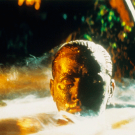
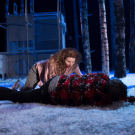
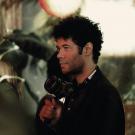
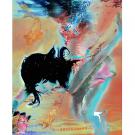



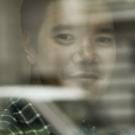


















































Dirk Stewen
Maureen Paley 21 Herald Street, London E2 6JT
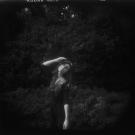
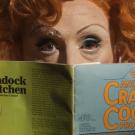
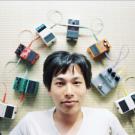
Working on potato starched paper from the post-war era, Dirk Stewen’s watercolour’s take on a ligneous texture as they combine with traces of glue and marks from work that previously inhabited the page. Works shown will consist of large sheets of photographic paper, each dyed with several layers of Indian ink, strewn with patterns of confetti and thread applied with a sewing machine, then joined together to form large rectangular panels.
Brooding, melancholic and languid strokes accompany the genderless figurative images adored in old fashioned props, whilst the abstract works express Stewen’s interested in geometry and balance. The crisp lines of paint capture a precise moment in time, a window to the intangible past that should really be seen first hand.
03 Oct 2010
Testbed 1
33 Parkgate Road, Battersea, SW11 4NP
A collaborative effort that has been gaining momentum over the past year, TestBed 1 focus on a series of screen-based digital commissions that explore the gulf between high-end cinema and low-fi independent films. As Youtube grants fame overnight to some videos, it propels others into obscurity amongst what is literally thousands of videos of babies or kittens. Thankfully, this exhibition promises nothing as cutesy but rather ponders the anarchy that might ensue in a world in which creator and consumer roles collide.
03 Oct 2010
Frieze
Regents Park 14-17 October
It’s October, which means Regent Park’s casual weekend picnickers are about to be replaced by swathes of art enthusiasts. Highlights will undoubtedly include shows from ‘The 303 Gallery’, ‘Seventeen, ‘Elizabeth Dee’ and ‘Frame’. Having only launched last year, the ‘Frame’ section of the Fair encompasses only young Galleries and their latest contemporary exhibitions. Look out for Ruth Ewen’s explorations of protest, ‘The Museum of Everything’ and social anthropology at the Rob Tufnell gallery and Tony Just’s Rorschach inspired paintings that drip as if they were graffiti freshly sprayed on a wall.
03 Oct 2010
Polytechnic: come with us now to a journey to the 1970s
David Critchley, Pieces I Never Did, 1979, 31 minutes, U-matic transferred to DVD; 3 monitors, Exhibition view, Raven Row, Courtesy the artist, Photograph by Marcus J. Leith
The late 70s was a period of instability and uncertainty in the UK as Thatcher’s Conservative government saw a rapid rise in unemployment and de-industrialisation. Focusing on the generation that emerged amidst this background of public un-rest, Richard Grayson and Raven Row director Alex Sainsbury organised Polytechnic.
Taking inspiration from the early 1980s Newcastle collaborative The Basement Group, this show is set to include everything from installations and poster art to VHS work.
Featuring pieces from John Adams, Ian Bourn, Susan Hiller, Stuart Marshall, Cordelia Swann and Graham Young, the gallery space highlights how new media’s accessibility challenged the capitalist practices of painting and sculpting. As new technologies developed, so too did their application as visual media grew beyond its mainstream state media province and gradually took on an artistic narrative.
Every room is set to be a disorientating cacophony of noise, as loud recordings ring out against ambient sounds and over snugly fit headphones whilst nuances of nostalgia envelope the space. Susan Hiller’s piece deals most directly with humanity, time, immortality and memory as the array of fuzzy, monochromatic works earnestly convey socio political commentary that is as relevant for the heightened tensions of today’s society as it was for the rapidly expanding world of the 70s and 80s.
Polytechnic, Raven Row, 56 Artillery Lane, , London, E1 7LS, 020 7377 4300 ,Until 7 November
03 Oct 2010

Snipe Highlights
Some popular articles from past years
- Hope and despair in Woolwich town centre
- Nice map of London's fruit trees shows you where to pick free food
- Margaret Thatcher statue rejected by public
- The best church names in London, and where they come from
- A unique collection of photos of Edwardian Londoners
- Diary of the shy Londoner
- Nice Interactive timeline lets you follow Londoners' historic fight against racism
- 9 poems about London: one for each of your moods
- Punk brewery just as sexist and homophobic as the industry they rail against
- The five spookiest abandoned London hospitals
© 2009-2026 Snipe London.