
NME Radio gets the axe, 6 Music may be the beneficiary
Unless you’ve been living in a cave—or listening to Heart FM—for the past six months, you’ll have heard the anger which greeted the BBC’s plans to axe 6 Music, its digital radio station dedicated to alternative music.
What BBC radio boss—and its one-time marketing chief—Tim Davie didn’t expect was to see 6 Music’s audience soar as a result of the row, which had given the station a publicity boost of the kind that his PR campaigns for the station had never quite achieved.
But another champion of new bands has already slipped off the air. On 12 June, NME Radio quietly sank under the radio waves—its DJs thrown overboard and an automated service put in its place. Funnily enough, that automated service is better than most other things on DAB radio right now —if it’s still on air by the time you read this.
NME Radio was a simple, uncomplicated, indie rock station. The NME name may have deterred some listeners at first, but it came as a pleasant surprise, there whenever 6 Music got a bit too talkative or pseudy.
But the sums didn’t add up, with DX Media—the firm producing the station under licence from publishers IPC—suddenly ending its contract.
IPC was serious about NME Radio tearing up trees. For its launch in June 2008, it provided studios inside its Southwark HQ, while NME editor Krissi Murison recently declared the station was ready to “fill the gap” if the BBC axed 6 Music.
But NME Radio attracted little of the advertising it needed to survive. An unintentionally hilarious trailer for the Metal Hammer Meltdown rock show “with Gill and Bees!” (or was it “killer bees?”)—cue drum and vocal racket—seemed to fill every other ad break.
Who was listening? In October 2008, after its launch, it was clocking up 215,000 listeners each week via satellite/cable TV and online. Respectable for a station which had been given very little promotion beyond NME’s magazine and website.
However, by May 2010, with the station on DAB across the UK, it had reached 226,000 listeners. It appeared the station had spent 18 months just treading water.
The station’s launch on DAB was also overshadowed by the furore over 6 Music’s planned closure—which delivered hundreds of thousands of new listeners to the BBC station. Its audience is now over a million.
BBC management claim 6 Music’s output is “commercially valuable” but the woes of NME Radio, and others before it, suggest otherwise.
Xfm’s original incarnation crashed and burned less than a year after its launch in 1997, while an attempt in 2008 to give Q Radio a high-profile relaunch also foundered after just a few months. That station has also now vanished from DAB sets.
Advertisers just aren’t interested in authentic-sounding indie music radio in sufficient numbers to cover the bills—especially when that cash is needed to pay for expensive platforms like DAB.
As for the future, you’ll still find a DJ-free, ad-free version of NME Radio on the magazine’s website, while leading DJ Jon Hillcock has signalled he’ll continue his New Noise show as a podcast.
Now all ears are listening for what noises come out of the BBC Trust, which is deciding if it should approve 6 Music’s closure. NME Radio’s loss will be keenly felt by many—but the trust’s members will surely have seen that alternative music radio simply can’t survive in the commercial sector.
Maybe, just maybe, the loss of NME Radio may save 6 Music.
03 Jul 2010































































































Market Crash: London’s historic markets under threat
Street markets have been an integral part of London’s history, shaping the communities and local economies around them. Some of the city’s markets have been trading for centuries, and even from Roman times, but now many of the traditional ones are in decline or in serious threat of disappearing altogether.
There are many factors that have contributed to the instability of London’s street trade. Rises in rent and rates, the recession and competition from supermarkets have all contributed to the deterioration of the capital’s established market places.
And how can conventional markets compare? Since the recession people are unwilling to spend their spare cash on what has recently become a luxury item, clothing. Richard Miller has worked on his clothes stall for 27 years; but he can no longer afford to employ another member of staff and lately describes breaking even as a good day:
“I used to be able to work for an hour and make a profit, but this year I haven’t broken even once and without fail the council have put up the rent.”
This is a similar story with most traders, in economic hardship, people are assessing their basic needs and clothes, by tradition a necessity, have become a luxury good that many people would rather not buy from the market.
Many stalls in the markets simply cannot compete with the throw away culture, symbolised by stores such as Primark, where shoppers can buy a complete outfit for under £8.
Rates set by local councils and management associations have inflicted a fair amount of damage to the average trader. Shepherds Bush Market, which is managed by TFL, have increased their management rates by an average of 27 per cent during 2008-2009. They also charge traders interest on late payments, which has priced many traders out of business.
But even local councils are feeling the effect of the decline, with a significant loss to their income. Revenue from Camden Market, for example, fell from £30.7 million in December 2009 to £3.15 million in March 2010.
Traders are not the only casualty of the potentially dangerous decline in business for street markets; charitable shops are also feeling the pressure.
Donations to the local charity shop on Leather Lane market have also been affected. Manager Dee Waltham explained:
“The quality has gone right down. We used to get good donations but now it’s more Primark and less designer. The frequency of donations hasn’t changed, people are still giving, but now we are getting a lot of things that we can’t sell.
“We’re getting broken things, because people don’t want to pay for disposal, so we end up with rubbish on our door step everyday, sometimes it feels like a dumping ground. Then we have to pay for it to be removed.”
“We rely on the market to bring in customers, I don’t know what we’ll do if it closes.”
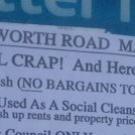
Some food and sundries markets are able to sustain a steady amount of customers by selling cheap, specialist foods. Ridley Road market, also known as Dalston market, has a reputation for its affordable fresh produce and ability to cater to the diverse community surrounding it. This summer it will benefit from a million pound regeneration to coincide with the 2012 Olympics. Hackney council will provide 165 larger pitches, as well as a new layout to make the market more attractive to shoppers. There will also be an improvement in waste collection and recycling facilities to help the environment around the market stay clean and green.
But even this market is not without its troubles, Hackney council have prosecuted traders and brought them to trial for selling fresh vegetables in pounds and ounces and not kilos. The traders who pled guilty to the charges were fined £615 in addition to £5700 court costs. Hackney council has also refused continued rental and demanded possession of storage properties for part of the market, leaving many Ridley Road traders without the fundamental provision.
Gary Roberts has been a green grocer at Ridley Road market for over 30 years; he explained how the council’s actions have had detrimental consequences for the traders:
“The council is not listening and it’s not helping the market. There have been over 40 stalls empty at the same time and it just gets worse. We are being driven out of the market”.
There are of course, resilient markets in London. Queen’s Road market in Newham generated £13 million in revenue for the local economy in 2009 and fills all 121 stalls every day. It is so profitable it has a waiting list for traders.
The shift of conventional necessities has seen an unlikely commodity establish its profitability in the market place. Fifteen feet away from a derelict clothing stall in Leather Lane market, a mobile phone vendor is inundated with customers. Since the recession the business in mobile phones and accessories has seen Tony’s profits triple.
“Yeah, business is very good,” he says with an animated smile. And why shouldn’t it be, now mobile phones are almost a requirement for the average person.
“Every one of my customers needs their phone, they can’t do without them, but they still want a bargain, and that’s why they come to the market.”
Tony has only been a mobile phone vendor for three years; he used to sell designer children’s clothes, but could not make a profit.
There is hope for our market places; a vital prospect for improvement is on the horizon. The mayor of London, Boris Johnson, made a commitment to look into existing planning policies and find out whether or not they support street market retail outlets. He also commissioned a report, which was carried out by the London Assembly’s Economic Development, Culture, Sport and Tourism committee that reported although London’s markets benefited local communities culturally, socially and economically, many were struggling. The report underlined the critical threat of closure many markets in the capital face and urged immediate action be taken by the mayor to save traders who are at risk in the short term.
In his mayoral statement of intent, Boris Johnson pledged to ‘support street and farmers markets and their development and expansion.’ The mayor has proposed a revision of The London Plan, a strategic policy that will set out specific directions to councils on the importance of street markets for all of London’s boroughs. But the mayor has yet to provide a clear timeline for when the guidance will be finalised or set out a clear strategy for supporting street markets across the capital.
As a result the final version of this plan is not likely to take effect before 2011, which means many markets still remain under threat and it will be far too late for traders like Richard: “We’re a thing of the past, I live day by day, I don’t have any long term plans because the stall might not be around for much longer.”
03 Jul 2010
336 Hours
MEMORYHOUSE » 2 July
The Social | 5 Little Portland Street W1W 7JD
Few writers have managed to do justice to glo-fi/chillwave in print, falling back on woozy cliches whilst trying to convey that feeling of dreamy dislocation. It’s a tall order though, because responses to the sound are uncommonly subjective, it tickling one’s nostalgia receptors in a most peculiar way. So it’s appropriate that The Line Of Best Fit have got visual god Jamie Harley on board to provide a live thought canvas for crackly Canadians Memoryhouse, Visions of Trees (think Gang Gang Dance on Xanax) and prolific dream scholar How To Dress Well (his debut UK show) at their Ill Fit night. Pop along and dream the night away. Laura Snapes
SOUND OF ARROWS » 5 July
Hoxton Hall | 130 Hoxton Street N1 6SH
It’s no secret that Sweden based Labrador Records have spawned some of the indie world’s greatest underground pop acts over recent years. What with recent critical success from The Radio Dept. and Club 8, plus a new Suburban Kids With Biblical Names album in the pipeline, there’s certainly no sign of them easing off on the quality control. After releasing three brilliant singles, Labrador’s Sound Of Arrows return with a freshly inked major label deal and the world at their feet. If their recent video for ‘Into The Clouds’ is anything to go by, you’re in for an intergalactic, star-spangled pop treat of epic proportions. No 3D glasses required. Rich Thane
TOUGH LOVE RECORDS ALL-DAYER » 24 July
Stag’s Head | 55 Orsman Road N1 5RA
Tough Love Records has some impressive DIY chops. Five years of releasing records of under-the-radar Brits (and a one-off single release for dance/noise heavies HEALTH) is to be celebrated with an all-day event with choice cuts from their roster, from surf-punk party boys Fair Ohs to robotic math-rock Brightonians Cold Pumas, and from Brummie noise-pop trio Calories to lo-fi organised chaos from Graffiti Island. Turn up expecting dancing, DJs until late and warm company and you won’t be disappointed. The best thing about all of this? It’s free entry all day. Time to make play while the sun shines. Jon Fisher
PERFUME GENIUS » 13 July
Hoxton Hall | 130 Hoxton Street N1 6SH
It’s hard to believe this will be Seattle native Mike Hadreas’s debut UK show after the slowly mounting critical applause for his (readily downloadable) shoebox-tape-style MP3 demos. But his first show it is, and by biding his time he’s created a genuine sense of anticipation around the gig. Under the name Perfume Genius, his debut album “Learning” has been charming journos and bloggers from all corners of indiedom with confessional lyrics and overwrought emotional delivery; half way between Xiu Xiu and Rufus Wainwright, perhaps. Genius? The jury is out. As for his perfume status, perhaps the front row can report back. John Rogers
THE DAMO SUZUKI NETWORK, CISSY, BLEEDING HEART NARRATIVE » 16 July
Kings Head | 2 Crouch End Hill N8 8AA
Unless you’ve been living under a rock, far far away from anything approaching alternative, you’ll be well aware of Mr Damo Suzuki (yes him of kraut rock legends Can fame) and his neverending tour. He continues to endlessly travel with an ever rotating cast of improvising musicians to back him. Gigs are frequently recorded as the line up constantly shifts and changes. Who knows where tonight’s show will take us. Propping up the bill are afro beaters and synthpunkers Cissy and post CST records drone pop ensemble Bleeding Heart Narrative. Both supports could ably headline in their own right, so this show should be unmissable. Sebastian Reynolds
THE KNIFE with PLANNINGTOROCK, MT SIMS, HOTEL PRO FORMA » 27/28 July
Barbican Centre | EC2Y
Swedish brother- sister duo The Knife breed contradictions. They don’t like being photographed au naturale, and as a result end up with strikingly original images of their masked faces; they didn’t ever want to do traditional live gigs, and so have ended up with one of the most innovative stage shows of recent times, playing in head-to-toe black outfits with sculptures and multi-layered projections surrounding them. This two-day residency sees them presenting their opera project “Tomorrow, In A Year”—a musical collaboration with Planningtorock and Mt. Sims with visuals by Hotel Pro Forma. John Rogers
FOG » 31 July
CAFE OTO | 22 Ashwin Street E8 3DL
The night after soundtracking Watchmen-creator Alan Moore’s new spoken word & multimedia project “Unearthing” as Crook & Flail, Andrew Broder will play a rare london show under his Fog moniker this July 31st. Part of the Anticon scene that brought us cLOUDDEAD and WHY? (Broder is currently also a member of the latter’s touring band), Fog are a crossover of abstract poetry, almost-rap syncopated vocal delivery, and awkward, slanted, sometimes ambient indie-rock. Grab the chance while you can—this will be a sellout. John Rogers
03 Jul 2010
Summer Camp: Roll out those lazy, hazy, crazy days
Eight months ago, NME hack Elizabeth Sankey and acoustic troubadour Jeremy Warmsley sat with a PR company to discuss Summer Camp’s mission to rip the blogosphere a new one. “Stay anonymous,” said one exec, twirling his moustache. “Even if you’re terrible, bloggers will be salivating to be the first to unveil your true identities.”
“Elizabeth, ring your hack friends to get the buzz going,” added another. “We’ve already got ultra-trendy blog Transparent to write that career-defining first post, and some false leads on your identities: a collab between the chick from The Concretes and Jens Lekman, or a breakaway faction of I’m From Barcelona – Sweden is so hot this year.”
At least, that’s the sordid tale of events that cynical bloggers would like to believe, suspicious that Summer Camp could arrive so perfectly formed with their sparkling Shangri-La harmonies and electrifyingly languid beats.
“I’d certainly do everything I could to avoid going back to being the guy with the acoustic guitar,” says Jeremy, wincing at the “troubadour” tag. “I don’t really like music that’s just one man and a guitar, to be honest. There, the cat’s out of the bag!”
“Someone asked if I thought it was a conflict of interests to be a music journalist, but I don’t think I am one,” adds Elizabeth. “I was only writing about bands for four months before we started Summer Camp. We could’ve used our contacts, but I don’t think any of our friends would have been into it!”
If anything, the only reason to fib about their origins would be to disguise how accidental they really were: Elizabeth put The Flamingos’ cover of ‘I Only Have Eyes For You’ on a mixtape for Jeremy, then they spent a weekend recording their own version. They adopted MySpace’s randomly offered location of Dalarnas län as their hometown to lessen the chances of being rumbled by their friends. But a day later, Sahil Varma of influential blog/label Transparent stumbled across them, and, charmed, asked if they could release a 7”.
“They had virtually no plays,” says Sahil. “I became obsessed with their perfectly captured nostalgia and swooning pop melodies, which never came across as pastiche. We asked to do the single, but unfortunately weren’t quite as big as Moshi who eventually released ‘Ghost Train’.
“I really wanted to do it,” says Elizabeth on taking it seriously. “At first, we weren’t thinking we’d play live and that we’d stay anonymous, but after the offer of a single we reconsidered. That’s when it got difficult – we were stuck with this secret and hadn’t worked out how to tell people, and we had to work out the live set-up.”
They also had to rethink their day jobs. At the time, Elizabeth was editor of youth webzine, Platform (she’s since left), and after a fallow period, Jeremy had abandoned his solo career to start a band called Acres Acres.
“That was my main focus before we started Summer Camp,” he explains. “It was me and some friends. It was going quite well – we’d done a demo, talked to a few managers. But then Yoko here came along,” he jokes, nodding at Elizabeth, “It’s one of those things – the more self-consciously you plan something, the less likely it is to work out.”
“I wanted to be an actress my whole life,” says Elizabeth, mock outraged, “and it’s so ironic that after trying to do that for so many years, something I never thought I’d do is happening, and much quicker.”
What started as a pleasure project suddenly got derailed by the breakneck speed of blog culture. An early trip to a label HQ turned out to be the embarrassing reveal to an office bet on their identities, and when asked by NME’s new bands editor to interview Summer Camp for their magazine debut, Elizabeth had to admit it was her.
Having achieved notoriety online, the chance to cut their teeth on the toilet circuit before being subject to industry scrutiny was snatched away, so they snuck onto dark London stages to trial run their shows in public. When word escaped of a matinee set in Notting Hill this March, anticipation was astronomical, and Elizabeth, who had only ever sung live as part of her drama degree, was uneasy.
“I’m quite controlling, so putting myself in a strange situation I didn’t know if I’d go crazy, forget all my songs or freak out and jump offstage. The pressure’s huge – there are so many new bands that you have to abandon some of them. And it can be hard to support bands when they’ve been hyped up so much – you’re gonna want to be the one who says it’s rubbish to be a bit different.”
Unfortunately for the naysayers, it’s Summer Camp who are a bit different. These days, there’s a never-ending flow of lo/bro/glo-fi bands tripping on nostalgia, and it’s hardly news that most of them aren’t doing anything new, taking their influences – whether The Smiths or Link Wray – and dumbing them down, interpreting naivety as reduction of intelligence and an excuse for sloppy musicianship.
Summer Camp aren’t like that. There’s no mistaking their love of nostalgia for complacent wallowing; their influences might be old – John Hughes films and classic tales of girl-meets-boy – but the world they’ve created is enticing, making new to younger listeners this halcyon ‘80s world they never experienced. Given that they’ve only been touring for four months, they’re revelatory live – from the climbing acapella girl/boy harmonies that ignite ‘It’s Summer’ to the should-be-cheesy-but-somehow-brilliant key changes in ‘1988’, their swan song for the ‘80s Midwestern proms they never went to on account of being English infants. Like Hughes, they’ve captured the ephemerality of Kodak-tinged idealised teenage years – one where summers last forever and cads can break your heart in one fell swoop, but where dancing all night will make everything perfect again.
“It’s really odd to be doing this every single day now,” muses Elizabeth, “and to be putting yourself into a world that you never even considered entering.” One dose of Summer Camp’s pitch perfect nostalgia, and you’ll never consider leaving.
03 Jul 2010
Trash Kit: Music that makes sense
I once suffered the terrible misfortune of spending an evening in a grubby studio in East London where the most boring man in the world explained to me in great detail the finer nuances of the sensory condition synesthesia.
For those of you fortunate enough to have arrived at this point in life without such elucidation, synesthesia is a is a neurologically-based syndrome in which stimulation of one sense leads to automatic, involuntary experiences in a second, meaning you smell some dog shit, you hear a bell ring, or something like that.
For this harbinger of yawns, seeing music as colours was his curse. For example, stick some Kylie on the stereo and he’d stare vacantly into the distance and grumble “bluuuueeeee” like a man doing an incredibly bad impression of Grampa Simpson. Slam a bit of Maiden on and he’d yelp “PINK!” like he was getting into a hot bath, and so on.
Sounds like bollocks, yeah? Naturally I wrote him off as a tit and filed his disorder next to Wheat Allergies as illnesses only caught by terminally middle-class tossers, and went home and read the Guardian and shit.
Where this is going is here; listen to Trash Kit, the album by the band of the same name that sounds like it was recorded in a grubby studio in East London, and you’ll see the cut and paste mechanics of lovingly crafted fanzines and handmade record sleeves floating before your eyes. Stick your ear as close to the speaker as you can and you’ll see a shitty broken biro scribbling the lyrics onto the wall in front of you.
This is because what Trash Kit trio Rachael Aggs, Rachel Horwood and Ros Murray do is bring to life the cobbled-together ethos of do it yourself culture, and craft it into short stabs of loopy, chanty folk-punk brilliance.
“[Former Plan B editor] Frances Morgan said our music was ‘alchemical like friendship’ and I really like that description,” reckons Aggs. “I don’t like to call it anything really. We’re just having fun and making a racket.”
That racket has manifested itself as 17 tracks on their debut record, released in May by the super-cool Upset The Rhythm label, home to Gentle Friendly and No Age amongst others. If the label is their home, then their crinkly old relatives come in the form of girl-punk pioneers The Raincoats and The Slits, right? It’s an obvious comparison, and one Aggs tires of continually being made.
“We were in The Independent recently in this ridiculous article that grouped us with all these female musicians we had nothing in common with, like it was some kind of novelty girl movement—but we do love The Slits and The Raincoats so it’s definitely valid to compare us to them.”
So what of the DIY ethic that feels so prevalent in their music? As Aggs explains, it’s a world she’s all too familiar with: “We make a zine that we give out at shows. I’m getting to know more people that write Zines and I think it’s an awesome community and a great way of getting ideas out. I’m not really a writer but then that’s what’s good about zines, you don’t really have to be, you can just splurge out all your thoughts and feelings and no one’s gonna edit them down.”
It’s how they make their zines and its how they make their music. Splurge then stop, and if it sounds good, keep it. Put the record on and see for yourself. It’s a wonderful audio-visual mess from a stuck-together world. It’s not synesthesia, but it definitely makes sense.
03 Jul 2010
Diary: The World Cup doesn't need an official song
When the FA decided in January that there was to be no official song for the English team’s World Cup run for the first time since 1966, the outcry was minimal, barely audible. News corporations struggled to summon the energy to make a story out of the announcement, relying on soundbites from ‘the public’ as inane as “It seems a little petty. Songs like ‘Three Lions’ and ‘Vindaloo’ have been great for the fans”—an interesting one as neither song was endorsed by the FA for a World Cup campaign.
There were sentences from the mouths of Peter Hook, Rik Mayall and Jimmy Pursey of Sham 69 which failed to rouse any rebellion from the masses, perhaps because they were largely self-serving.
Hook argued that the tradition added to the experience (having been involved in 1990’s ‘World In Motion’), Mayall had his own unofficial song to sell (look it up on Youtube if you dare – it involves chain mail) and Pursey chose to use the platform to decry Embrace’s ‘World At Your Feet’, used by the FA at the last tournament in 2006 (Sham 69’s effort entered the charts seven places lower..).
Whether professional jealousy or a cynical collection of an interview fee, Pursey made a decent argument. Our last two campaigns would’ve ended exactly the same way had the British population not been subjected to the monotony of Ant & Dec’s ‘We’re On The Ball’ or the aforementioned ‘World At Your Feet’, a song so bad it sent Embrace into a hiatus.
Hook did too, though. A great song will unite a nation for a summer—New Order in 1990 and Baddiel, Skinner & The Lightning Seeds in 1996. My advice to you: listen to those and ignore all others. The FA, for once, had the right idea.
03 Jul 2010
Shark Tales: The Leonardo Question and Some Stories
Formaldehyde isn’t dependable. Drinking it guarantees a hangover, if you live, but try pickling an entire shark in the stuff. Damien Hirst famously submerged Jaws in preserving fluid for his Turner Prize-nominated piece, The Physical Impossibility of Death in the Mind of Someone Living, but it rotted away and had to be replaced. The shark made Hirst rich, stinking rich, stinkier than a putrid fish. Today he sells paintings of spots somebody else does because he can’t be bothered and diamond-encrusted skulls for millions of pounds.
In The Leonardo Question, two visitors to a contemporary art gallery discuss Modernity, from the moment Picasso’s Les Demoiselles d’Avignon ripped the world to pieces and slapped it savagely back together. Marcel Duchamp, Peggy Guggenheim, Jackson Pollock, Andy Warhol, Hirst and Tracey Emin swarm the stage spouting soundbites. Written and produced by art dealer Caroline Wiseman, Leonardo ponders who will be the next “master”, following da Vinci and Picasso. What it’s really asking is whether there can be another master in an age when artists don’t even know how to paint spots.
Three actors take on the glorious monsters of a century of art. Patrick Rogers, Kyle Ross and Clemmie Reynolds have only moments to present a brief sketch, a caricature of monumental egos, before they have to change their wig and move on. There is no drama here, and little depth. The actors have fun when they let loose (except in the case of Warhol, when the laughs come from seeing how constrained and empty he was) but they are working with quotes, portraying iconic, iconoclastic personalities too large to contain for a passing moment. Only Peggy Guggenheim is allowed a human dimension. Wiseman’s script, admittedly her first, is neither quite polemic nor historical drama but merely gives the audience a spirited tour of 20th century art in preparation for the second half of the evening, a post-show dinner and chat with a visiting art historian/academic. Here you’ll find the real drama, especially if you make some yourself, hammering out your opinions over vino and a Rosemary Branch meal. Try the fish.
The stairs leading down to Black’s gentleman’s club are thick with flies. Once this building housed Dr. Samuel Johnson’s The Club (according to allinlondon.co.uk, though I thought The Club was at The Turk’s Head on Gerrard Street) where he and his mates gathered to tip fine booze toasting each other’s triumphs, both literary and concerning the prostitutes of neighbouring Meard Street.
In the corners of these small rooms today, Some Stories are being told of a different sort. A woman tells a young, stonily silent girl about her mother, for whom she pretended to be her dead twin brother all her life. A child-murderer dissolves before our very eyes, but does he kill because he is dying or is he dying because he has killed? A woman leaves a flood of messages on answering machines, tying up her loose ends like ribbons around parcels of guilty despair. A young, simpleminded girl, who just wants to be liked, is invited to a party where only a few boys await her.
The theme of violence towards children runs heavily through all these stories—like the very darkest and most vivid fairy tales. All four hold a moral potency, however, in Blue Rabbits, Flora Spencer-Longhurst gives the most powerful, frankly terrifying performance. The other stories are told by grown-ups, but in Blue Rabbits our protagonist is a fragile, hopeful little girl and we know from the previous three tales that nothing good can come to her. Spencer-Longhurst looks about 12 herself (I had to check the programme—yep, she went to Manchester University) and when she stares at you with her huge dark eyes and faltering smile, just before she relives her rape and confusing pregnancy, your heart breaks.
Some Stories has finished its too-brief run, but producers Cheap Seats have other shows planned for October.
AIDS and HIV have been tempered by drugs and treatment, but they haven’t gone away, and lives continue to be lost and mourned. Elegies for Angels, Punks and Raging Queens is a charity fundraiser on behalf of the Terrence Higgins Trust, running from the 10-28 August. This huge show features fresh material by writer Bill Russell, and producer John-Jackson Almond has pledged at least £5 of every £25 ticket will go to the fund. Promotion, as simple as word-of-mouth, and cash are what they need, starting now, and anyone interested in contributing can go to www.camdentheatres.com, or contact Almond through Shaw Theatre’s website, shaw-theatre.com.
03 Jul 2010
The Nancyboy Decade 1999 - 2009
The Book Club, 100 Leonard Street EC2A 4RH
Peering awkwardly over fellow punters whilst struggling to glimpse the wall above them isn’t my idea of a perfect private view. Especially when the only free drink on offer is one bottle of Becks each! The fact that I’ve been captivated enough to no longer care about breathing down people’s necks says even more about the dazzling work on display.
Nancyboy’s collages present a brash mélange of popular culture woven into a hilarious narrative. A dinosaur on the skin fast programme is reduced to a skeleton, death is objectified in technicolour glory through buzzing electric chairs and free falling losers.
The exhibition overall appears to frame the laid back atmosphere effortlessly whilst the space itself becomes a pain in the context of an exhibition. I reflect that this may be the point.
‘Over 3000 works were sold on ebay from 2000 to 2003’ gushes the press release, and a quick Google leads me to his prolifically abundant website. Nancyboy is poised to generate an income through ebay and online commerce which is an inspiring business model that more creatives are emulating by the moment. Whoever he or she may be, the Nancyboy world is refreshing, insightful and spot on.
The Nancyboy Decade will be on show until 29 July 2010.
03 Jul 2010
Bronco Bulldog: A 1960s London without hippies and the Kings Road
For those given to the act of thinking, there’s forever a sense of doubt attached to ‘established’ social history—a nagging feeling that the more interesting aspects of an era may be buried beneath a ton of cultural dogma. Bronco Bullfrog, shot on location in the East End in 1969, is a smashing, monochromatic example of such marginalia—the surly, underage sibling of Blowup and Performance, as insouciant and attitudinal as the latter two are self-conscious.
The ‘actors’ were a bunch of Stratford and West Ham kids coaxed off the streets by Joan Littlewood’s theatre company and the film’s plot is as spartan as the (largely) improvised dialogue: Seventeen-year-old half-hearted hooligan Del meets 15-year-old Irene. His dad and her mum disapprove (her dad’s in the clink) and so the pair take their relationship to the streets with all the ennui and frustration of a million teen couples before and since. Society at large offers them no space. It merely insists they sit their frustration out, which they do in Wimpy bars, derelict prefabs and late night strip-lit cafés with PG-Tips-spattered Formica table tops. They hook up with the titular character, who’s fresh out of Borstal. Ironically, the no-hoper status this should immediately consign him to is initially scotched by the fact he’s the only kid in E15 who’s captain of his own ship.
And yet, the film’s sense of social realism is such that Bronco, Del and Irene gradually appear to have no hope of escaping the gravitational pull of their background. When asked why he bothered coming back to the two-decade-old bombsites of Stratford when he could have gone up the “other end,” Bronco replies that he “don’t know anyone there.” The King’s Road, that attention-seeking poseur’s promenade that holds every phoney sixties memory in its strangulating grip, was a mere Circle Line ride away, but might as well have been one of Saturn’s moons. The characters’ lack of zeal in all their acts – sex, thieving, fighting, drinking – suggest a bleak sense of fatalism: that their lot may be Their Lot.
Bronco Bullfrog is sharper than any frenetic, kinetic contemporary ‘youth’ movie owing to what it leaves out. The minimalist dialogue would likely make a modern young audience uncomfortable (and would freak an American one out). Ten minutes of film—which would now be filled with ‘street’ babble —here features 30 seconds of awkward, parsimonious teen dialogue (‘Wanna go out with me tomorrow night?’ ‘OK’ ‘Alright, see ya’), which briefly make it a comedy of embarrassment.
I’ve heard this film described as a monument to ‘Mod’ more than a few times. This cultural narcolepsy (‘If it’s the sixties and it’s not hippies—it must be Mods!’) is best paid no mind. While there’s no conscious sense of subcultural identity or tribalism evident among the kids of Bronco Bullfrog, this lot are the end product of Hard Mods, i.e. suedeheads: those whom means were as slender as their silhouettes and for who petrol-blue Italian mohair suits were out, but Sta-prest, button-down shirts and steel-capped leather boots were in. Unlike the loon-panted, cravat-sporting scions of SW3, they do not look in any way ridiculous to modern eyes (the doe-eyed, tumble-haired Irene looks unnervingly contemporary). It’s thus a shame that the (specially recorded) soundtrack doesn’t reflect the subculture in question. Surely skanking bluebeat and ska would have trumped the longhaired, bass-heavy sounds of The Audience, given the proto-Skin nature of the protagonists.
The unbilled character here is London. Bronco Bullfrog is a pin-sharp, hymn of authenticity to a vanished section of the capital now more host to the ubiquitous than the unique. There are glimpses of Hackney Speedway (now buried beneath the rising Olympic stadium), an unpedestrianised Leicester Square in a trip ‘up west’, freshly-set concrete flyovers over which Del drives Irene, pillion-style and even a working dock, probably the last of its kind. In the distance, Balfron Tower is visible, a symbol, along with the high-rise Irene lives in with her mother, of an anticipated future that never arrived.
03 Jul 2010
Savage Love: Little Baby Kitten Girl Sounds
I am a married white guy in my 50s. My wife and I do some role-playing where I am “Ted,” her real-life father. In her script, I yell at my “bad daughter” (my wife) over some infraction and send her to her room. Later on, I sneak in and tell her that she could “make Daddy very happy” if we were to do some “secret, special things” together. I usually end up fingering her still-virginal butt while “forcing” her to suck my dick. Then I roll her over and rape the hell out of her.
I’m being GGG, and she absolutely gets off on it. We’ve done this scene a few times, with increasing frequency, following her script every time. I do have some concerns, Dan: (1) It’s creepy, and (2) I’m worried that this might all be “based on a true story.”
What to do? Keep a good thing going or confront her about her father? I’m going to feel like an idiot if it’s all just a harmless fantasy.
Concerned “Father’
What if it is based on a true story?
Let’s suppose your wife was raped by her actual father and—after years of processing the abuse and the trauma—she emerged happy and healthy and stable, but… saddled with an all-consuming, high-creep-quotient incest-role-play fetish. Your wife isn’t alone: A small handful of rape victims develop fantasies about rape role-play scenarios, an even smaller number of Holocaust survivors developed Nazi role-play fantasies.
Sometimes our erotic imaginations are as inexplicable as they are powerful.
Now let’s suppose that your wife is healthy enough emotionally and sexually to safely explore these deeply creepy fantasies—because now she’s in complete control, because now she’s with someone she loves and trusts—and that she isn’t traumatised by reenacting these deeply creepy scenes from her childhood.
Shouldn’t she have just as much a right to enjoy and explore her sexuality as any other person, CF, regardless of the forces that shaped it?
I’d say the answer to that question is yes.
All that said, CF, you have a right to ask pointed questions—particularly if “Ted” is still alive and you have to sit next to him at Thanksgiving—and she has a responsibility to come through with detailed, honest answers. You’re not some casual up-for-anything stranger your wife recruited online. You’re her husband, and you have a right to know just what sort of land mines you’re stomping on or around, even if your wife considers them defused and harmless. Because there are huge potential consequences for you—emotional and sexual—if your wife is being traumatised by the role-play games she’s asked you to participate in.
And, finally, here’s hoping it’s all just a fantasy and that your wife wasn’t raped by her father, CF, although that isn’t going to make her fantasies any less creepy or Thanksgiving dinner with Ted any less awkward.
I’m a 23-year-old, single gay man. One of my siblings (with whom I was close) passed away about a month ago. I want to start dating again, but I’m not sure how to tell if I am or when I will be ready. I don’t want to be unloading my issues on potential first dates (that’s why I’m starting to see a therapist), but during the getting-to-know-you small talk, siblings always seem to come up. How do I handle this without seeming unmoved by my sibling’s death and without scaring off the other guy?
Trying to move forward
While you don’t want to burden a potential new boyfriend (PNB) with the full weight of your grief, TTMF, the only PNBs you’ll scare off by mentioning your grief are PNBs with empty lube bottles where their hearts should be—that is, PNBs with no potential, PNBs you should be anxious to be rid of.
So when the sibling talk comes up, TTMF, mention your recently deceased sibling, accept your PNB’s condolences, and then change the subject. What that communicates about you, PNB-wise, is this: You’ve been touched by grief recently, but you’re not paralyzed by it, and you’re ready to date.
And I’m so sorry for your loss, TTMF.
Please help me. I can no longer stand the thought of having sex with my fiancé. He’s a great guy—very kind and good. The problem is the sounds he makes during sex. Little whiny girl sounds. Like, not even woman sounds—which, being attracted to men, would be a big enough problem for me. No, he makes noises like a tiny little baby kitten girl. It has gotten really bad. I avoid sex (we usually don’t even sleep in the same bed, although we live together). When we do have sex, I spend the first half dreading the moment the girlie sighs start and the second half trying to ignore them. So, basically, I’m checked out for both halves—which he notices and obviously doesn’t like.
I know this sounds trivial, and it wasn’t such a big problem for the first year of our relationship. But it has grown from small annoyance to giant grating huge turnoff. I don’t know how to tell him to stop. I have brought it up before, but it sounds so stupid, and then he gets self-conscious and I feel bad. I can’t marry him under these circumstances, though. What do I do?
Ears plugged
Your great and good fiancé deserves the truth. And come on, EP, what do you think is going to make him feel worse: you leveling with him about the damage his tiny little baby kitten girl sounds (TLBKGS) are doing—to his sex life, to his relationship—or you calling off the marriage because you just can’t fuck him anymore?
Here’s what you need to do: Tell the fiancé again, calmly but firmly, that the TLBKGS are a huge turnoff. It’ll hurt to hear, for sure, but he’ll hurt worse if you let the TLBKGS destroy your marriage before it starts. Then the next time you’re fucking him and he starts to make TLBKGS, stop everything. Don’t pull away from him physically, don’t push him off you, don’t scowl or grimace or roll your eyes. Just stop whatever it is you’re doing and say in a flat, nonsexy, nonaccusatory tone, “That sound you’re making is a huge turnoff. It kills sex for me.” Wait for an appropriate response—“Oh, I’m sorry, I’ll stop”—and then immediately pick up where you left off.
Repeat as necessary until the TLBKGS are an unpleasant memory. I’ve seen this approach work—call it the “full stop”—on biters, screamers, scratchers, and gratuitous-mid-fuck-ass-spankers. It’ll work on tiny little baby kitten girl sounds, too.
HEY READERS: Do you have the new iPhone? Get the Savage Love iPhone app, available now on the iTunes store! And you can always find the Savage Lovecast (my weekly podcast) at snipe.at/savage.
03 Jul 2010

Snipe Highlights
Some popular articles from past years
- Peter Bayley has worked for 50 years as a cinema projectionist in East Finchley
- The five best places in London to have an epiphany
- Summer Camp: Roll out those lazy, hazy, crazy days
- The best church names in London, and where they come from
- The five spookiest abandoned London hospitals
- Nice Interactive timeline lets you follow Londoners' historic fight against racism
- Could red kites be London's next big nature success story?
- Nice map of London's fruit trees shows you where to pick free food
- London has chosen its mayor, but why can’t it choose its own media?
- A unique collection of photos of Edwardian Londoners
© 2009-2026 Snipe London.